I used to work a desk job. In fact, over the years, I ‘ve done this numerous times. I can relate to my clients who present for their session with that bone-deep pain or hot nerve aggravation that seems to be stemming somehow from everywhere and nowhere simultaneously. Among other activities that might affect one’s anatomical frame, it’s a pretty common result clients report time and again from being poured over a desk all day for one’s job. I hope it helps my clients that I am so familiar with this particular brand of discomfort for myself. I like to think it informs my needs assessment for session design.
It was at a time in my life when I was working at one of these desk jobs. It was the kind that let you know at about 4:30 pm that “we’re working late to finish this,” and you end up staying until 10 pm with no real dinner planned for. You work late, miss your kids, and leave, half starved, brain dead, exhausted, and thinking, “how on earth am I supposed to be up at 5 am again tomorrow to get everybody ready for school so I can get to work?!” It had been a series of weeks like that and that more lingering brain fog started to set in—the kind where you find yourself dreaming in color-coded spreadsheets.
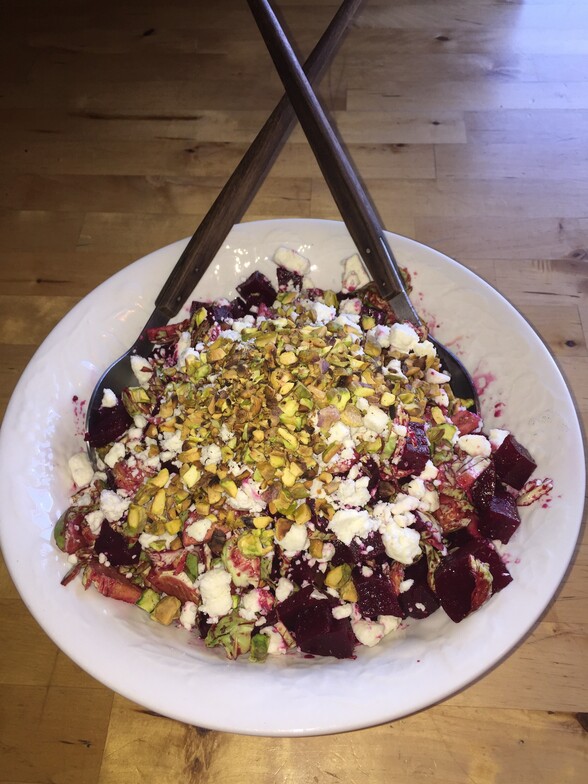
I found myself in the grocery store lane, having shopped for the family’s groceries for the week and I was in one of those exhaustion stares—only this time it happened to be aimed at my grocery cart. And much to my delight when another conscious thought bubbled up to the surface finally, was the realization that everything in my cart was objectively healthy, wholesome, and something I wouldn’t have to argue with anyone to eat or not to eat and I somehow didn’t overshoot my budget for the store run. That time, was the second thought that burgeoned to the front of my brain.
It was in this moment, I conceived of the notion of “chokepoints” as a mental model to drive better decisions that got me to where I actually want to be in life—without the painstaking constant effort that could otherwise be required to invest my precious mental energy in because let’s face it, there’s not always a ton of extra mental real estate on the brain frame market when you’re in a daily grind. In other words, I don't have to think about this thing ALL the time, I just have to think about this thing at the RIGHT time (whatever that thing may be).
In the field of massage therapy, we are taught that everything we do holds intention, or at least it should. This translates, in one concrete massage-specific example, to me placing gentle hands on a client, before I start applying pressure and digging in. Our palpation techniques are one of the main drivers to see where the tension lies and where the body is holding something out of anatomical alignment, which perhaps needs addressing with session time.
To illustrate further (in layman’s terms), if I go in for the kill outright, to wrench a knot out of your back and I break something, you’re not going to be very happy with me as your therapist, even if you asked for it, since I am trained and expected to make those very safety calls. We’re taught to warm tissue for a reason; the main reason being injury prevention—yours and mine. And with all due respect and compassion, I find that daily there are folks that seek my services that have some pretty compromising anatomical structural abnormalities built up from repetitive use syndrome, injury, or stagnation. So again, some of the fundamental intentions here are to restore the body’s natural structure and function, to alleviate pain, and to avoid further insult to injury.
I believe this principle of utilizing intention applies to all sorts of things in life besides giving a great massage though. And when I combined the rationale of both mental models (intention + chokepoints), I was further struck by how many places in life I had built in all these little checkpoints, sort of subconsciously at that particular point in time, as I was so tired when the epiphany struck. For me, this happened just in the course of trying to survive my super busy life in the modern world and striving to meet success at the goals I’d set for myself along the way for school, family, and my career. But it gave me much to reflect upon.
This is kind of funny when I stop to think about it, because there was a time I thought I was using intention all along since I had been trained in it pretty extensively via massage school, but life does what it does with daily and weekly schedules and the breaks can be few and far between, so it seems pretty natural that we think we set a course, but the wheels maybe came off somewhere along the way. I’m no exception to this rule.
Luckily, this is one of the ways I think I can help reenergize the clients I work with over time, especially since I have such a keen awareness centered around it. It’s a state of being, common to the contemporary human experience that I am intimately familiar with and resonates chords of empathy within me whenever I encounter clients who are in this type of daily struggle. I always encourage them to have grace for themselves because they’re doing more than sometimes registers for them and they should be proud of themselves for all they hold.
So ok, how do these chokepoints work? Well for me, this started a chain reaction of reflections in different areas of my life, because I realized that I could be set free from a regularly occurring set of mental burdens by simply paying attention at a key moment in time—and in this case, it was the grocery cart, waiting in the checkout lane.
So, from thenceforth, I made and applied my hypothesis to the matter in a variety of ways. For example, if I don’t want to constantly burn up my priceless cerebral bandwidth about what my family is eating for every last meal (and if it adds up to a lifetime of health or harm), but I do want to stay on budget and hit some predetermined nutritional goals then I would have to train my brain over time at these strategic moments to use the chokepoint method as a stop-gap measure to riddle me this: do the groceries in my cart right now reflect the foods I want to enter my home for my family to consume for their greatest long-term wellbeing?
Because for me and mine, I’ve had some pretty hard and fast rules about our grocery consumption over the years: eat real food; don’t buy soda for home; if we want a sweet treat, we make it from scratch so we know what went it in and we expended some of the calories we’re going to ingest by consuming it; limit sodium intake by preparing foods at home; prepare fruit dishes, nuts, and refrigerated veggie trays so the kids reach for healthy stuff first; put out fresh fruits and veggies for snacking when we’re waiting for meals to be ready so even if they fill up before the meal hits the table, I know they got substance in their systems. But I’ll be the first to admit that it can be incredibly difficult to pull off even tiny decisions when we’re out of steam.
A last minute self-imposed rating of my grocery cart before I check out, was one example of a chokepoint I noticed and built in, but there are a ton of other ways this concept can be applied to a person’s life, from household organization, work deadlines, financial decisions, etc. Use over time and coupled with some good biofeedback measures when new goals are set (and first implemented) has been an extremely invaluable tool for me to move through life with better intention and to accomplish the things I decided are important to me.
I believe this works so well because the heavy lifting is done at critical moments when you do feel rested, positive, and have a little time to reflect and set the intentions for what you desire in life. Setting intentions that align with your life’s greatest longings can be easy, or it can be difficult, and that may depend upon how truthful we want to be with ourselves, or how many other crummy lessons we may need to unlearn before we allow ourselves to dream bigger, or how great the cavass may be between our mind and body connection at any given time, but it is definitely worth doing even in small ways if for no other reason than to build the mental fortitude to enact this skill later, in larger sectors of your life or when there is more on the line to pay attention to.
The second step involves building the chokepoint in—where is the most natural place in life to double check this decision I already made for myself and want to stand by? I see small ways people do this successfully already, but the intention piece that came before it is what guides you to the outcome you actually want even when you’re tired, sick, or otherwise unable to think clearly. I haven’t yet found that I couldn’t identify the most organic place to build a habitual chokepoint in by simply considering it for a time, or by paying attention when the issue is presented itself again, and you see a natural place or method to do so.
Let me show you a couple of other ways I have used this. They may seem simple or silly to you, but they align with the needs of myself and my family and they help ensure that so many various tasks are completed, with as little mental effort as is necessary to do the job effectively. Perhaps many of you use them already. I think very few of us are juggling nothing.
Starting with the obvious, household organization and life goals. I’ve spent a lot of time as a single parent. I would never presume to think every parent has the same mental load, financial resources, or support networks built up around them; I can only provide examples of where this method worked for me and hope that it helps you too.
I learned pretty early on in my adulthood, that if there was a chore to be done in a house comprised of one parent and two small children, for example, the first order of business would be to determine what type of environment we wanted to create and then, how we would do so. Trigger warning, a lot of this involved daily chores, academic assignments, and boring financial tasks like earning money and paying for stuff. And nobody ever warns you about how much paperwork having even a singular kid can produce, but I bet there would be a lot less unplanned pregnancies if that little tidbit came to light more often. (Perhaps that should have had a sarcasm warning?)
So how did I tackle it? How did I run a schedule for myself and two children (at that time) that allowed me to work, study, and raise my kids the way I intended—in a house that was orderly and felt like a home and where we were enriched and encouraged in our learning pursuits? In simplified terms, I decided what I wanted for the lot of us based on the best research I knew, and then I decided I was the best person to do this for me and by proxy, the kids too.
Here’s a tangible example--I was enrolled in school and I wanted to finish it; that required planning at critical moments. The intention was to get through my program successfully, the chokepoints to ensure my success became: master scheduling at the start of my children’s school year and at each of my semester breaks on a huge paper calendar that everyone in the household could see. Layering alarms and reminders that coincided with the important events or tasks in my phone (since it’s practically an appendage these days anyway). Determining where the breaks were in our schedules long in advance of taking them, so that we could actually maximize our limited downtime together as a family. Coordinating once every year or so with a friend for a childcare trade that was stable and beneficial to both families, so I wasn’t constantly searching for one-off or substandard childcare at inconvenient times. Contacting new professors upon entry into their course to discuss my unique goals and challenges for the semester ahead. Deliberately, and sometimes awkwardly (did it anyway!) introducing myself to neighbors, academic or work peers as soon as possible so that my network could fall into place sooner than later. (Due to growing up in the Bay Area where earthquakes are always a potential reality, and especially after my experience with the October 17, 1989, quake that registered something like an 8.0 on the Richter scale, I saw at a young age, the utility in knowing your neighbors before a crisis strikes).
All of these little decisions were made with very little effort after my initial intention was set to finish school with a degree (and still have my family love me after the experience was over because that was big for me after what I felt I was asking of them to join me on such a wild ride). At the time, this had to be the case; I was running on empty, uphill with no shoes—proverbially-speaking. The chokepoints were all those little stop gap measures enacted to ensure the likeliness of making my deadlines and not having my homelife, assignments, bills, and housework snowball on me. When I left the house in the morning, I checked the paper calendar, when the alarm popped up, I checked where I was supposed to be or what I was supposed to be doing. If my friend had to reschedule our childcare trade, I already had a backup plan, but thankfully, didn’t have to think about it very often. We built in time as a family to read, dance, or visit a local attraction together.
I also did other things on my way out the door. A 3rd floor apartment coupled with an intentional desire to keep a comfortable abode meant that I would need to build in a plan to do things like take the trash out every morning on my way down past the bins. Lunches got packed the night before. Bags were unpacked as soon as we arrived home, so we didn’t meet as many unpleasant discoveries later on. They were repacked the second the homework was done and set by the front door drop zone. These were things that since I decided what I wanted to achieve, became so second nature to my routines that I literally never had to think about them or argue with anyone over it again. The expectations had been set in a meaningful way. My kids and I thrived with these mental models in place and while the bulk of our familial responsibilities lay squarely on me as the adult, we all knew our roles and were thus, able to work together more collaboratively at a time of great stress.
The point is this—everyone wants to relax and it can be tough to get a crack at some days. So, next time you encounter this type of overwhelm, try stepping back and giving yourself some grace. I find that old saying about “Rome wasn’t built in a day,” or “the work will still be there tomorrow” can be helpful when I’m up against a state of fatigue and need to let go to rest and regroup. I’ve used this framework so much that now, I’m confident that my chosen habits will carry me through those moments when I don’t want to compromise my overall life choices, but I know I’m running on empty, for now.
I’ve also applied these techniques to my budgeting and financial outlook and the results have been tremendous to my mind. An area of so much turmoil for so many people has faded into an easy chokepoint for me a couple of times a month and for a deep dive, once or twice a year. Because nobody wants to pay attention all the time. Getting more of your lifeforce back for yourself by setting some thoughtful objectives when you’re feeling your best and charting a course to catch the fly balls along the way when things aren’t such smooth sailing will hopefully, be the magic touch you need to reclaim that which you hold dear or are reaching for.
It is my goal for all my clients to be healthy, whole, and possess the ability to create room for abundant and unending joy in their lives. I want to see more folks in touch with their bodies, how they use them, how they take care of them, what a miracle they are, and how it can get them one step closer to all they yearn for in this life, since we only get one that we know of.
I hope my insights help you achieve all that you set out to do; I could not possibly describe all the ways using intention, and chokepoints (with the help of biofeedback methods to build ongoing habits) will help you minimize the chaos in your life so you can better focus on yourself and those you love. I have a couple of books I hope to discuss in the future, which may cause me to revisit the ideas presented in this post, but for now, I think it’s time to sign off and invite you to schedule a visit to Mortal Coil Massage and Core Strength Consulting, where not only can we help you relax and recover, but we can also help you develop chokepoints for your own pain relief between sessions. We look forward to connecting with you soon!